Category Archives: news

The university communicates its tolerance for violence on campus

According to Beth Bragg at the Anchorage Daily News, the Board of Regents of the University of Alaska, who are meeting in Fairbanks this week, weren’t happy with UAA’s “communication” strategy as it dealt with recent “nastiness” involving the school’s athletic programs.

As many in the community know by now, and very few university leaders seem to care, such nastiness involved a coach hitting a student with a hockey stick in 2011. Here’s how one of many witnesses Mike Spencer described the incident:

“Head Coach Dave Shyiak forcefully struck player Nick Haddad with a hockey stick in a baseball-style swing across the mid-section because Nick messed up in a practice drill. This was not a typical slash that sometimes occurs in hockey. It was hard and it was violent…The next day, on Wednesday January 12, 2011 Coach Shyiak conducted a team meeting in the locker room and instructed team members not to speak about the incident. In more specific words, Shyiak told the team to reply, ‘No comment, we were preparing for this weekend and things can get intense, it was nothing out of the ordinary,’ if asked about the assault.”

The coach’s boss, the recently fired athletic director Steve Cobb, found out about the incident, washed his hands of it and conveniently turned it over to another university staffer, who didn’t even talk to the coach or to Haddadd before he washed his hands of it and called it a day.

The problem for the university is that enough people witnessed the incident and knew about it that it refused to go away.

Cobb was fired recently. He wasn’t fired because he turned a blind eye to a coach accused of hitting a kid “baseball style” with a hockey stick. Cobb was fired because Gov. Sean Parnell wrote a letter subtly telling the university president that such behavior wouldn’t be tolerated under his watch and urged him to “take a stand.”

Apparently UAA Chancellor Tom Case doesn’t understand what taking a stand means. He said that Cobb was fired because “despite his efforts, Steve will not be able to bring all elements of the public together in support of UAA, and that criticism of Steve has become a distraction from the great work that UAA does every day,” Case wrote.

Here’s the message to parents: If you want to put your kids in the hands of our university, you should know that coaches, staff, and presumably teachers can hit your kid and we’ll only take action if it becomes a “distraction.”

Our motto: Spare the rod, spoil the child, until enough people take note.

According to news reports, the regents didn’t exactly hold Case’s feet to the fire and only seemed to perpetuate the notion that this behavior would have been acceptable had it not received public attention.

Anchorage Regent Gloria O’Neill, who I know was incensed over this matter, was quoted as saying that the event was unfortunate because “it was so public…As you think forward, what kind of communication strategy (can you) employ in the future … so this nastiness does not have to play out in the community?” she asked Case.

Case’s reply: “We were communicating what we were doing; there were just those who did not like what we were doing.”

Yes. They were doing nothing. They were saying nothing. And they were hearing nothing. And they would continue until enough members of the community, or as Cobb called them, “scoundrels,” told them that that was unacceptable.

If there’s one lesson that the board of regents and the university might take away from the nastiness is this: there’s no “communications strategy” that will allow any company, any institution or any person to get away with avoiding doing the right thing.

Here’s the right thing: tell the public that violence is wrong, will not be tolerated in the university system and that anybody—coach, student, teacher, janitor—who engages in that violence will be terminated immediately.

And tell the public that university employees who cover for those who engage in such violence, and those who covered for them in the past, will also be forced out of their cushy, post-military career jobs.

Contact Amanda Coyne at amandamcoyne@yahoo.com

Facebooktwittermail

About last night’s Valley fundraiser

Last evening in Palmer, Republican Sen. Mike Dunleavy and Rep. Bill Stoltze held a joint fundraiser that by all accounts appeared to be a resounding success, as such Republican gatherings in the overwhelmingly conservative Valley tend to be.

Governor Sean Parnell showed with his wife Sandy, who has kept a relatively low profile since Parnell was elected, much to some people’s dismay. Sometimes Parnell can come across as robotic, or as a writer once put it, like the Manchurian Governor. Sandy, on the other hand, is all grace and warmth.

Anchorage Sen. Lesil McGuire showed, with spouse in tow, presumably drumming up much needed Valley support for the lieutenant governor’s race.

Senate President Charlie Huggins was there with his wife Becky who, in my opinion,should get some sort of political-spouse medal for spending her birthday at the political fundraiser. She also should get some sort of special commendation for not pointing out, every time anybody mentions the decorated military career of her husband, that she is a retired major herself, and is a better helicopter pilot than he is.

Contact Amanda Coyne at amandamcoyne@yahoo.com

Facebooktwittermail

Sen. Lesil McGuire running for lieutenant governor

The tenacious, smart, impetuous, and always interesting state Sen. Lesil McGuire will be announcing on Wednesday at the Alaska Native Tribal Health Consortium that she’s running for lieutenant governor in the 2014 election.

McGuire was first elected as a state representative in 2000 when she was 29 years old. She won her current Senate seat in 2006, even though during her early years of public service she drew some controversy for issues related to alcohol and her ex-husband, former Rep. Tom Anderson, who was later sentenced to five years in federal prison.

McGuire’s fought hard to prove her mettle and has risen to be part of the Senate leadership team. She chairs the powerful Senate Rules Committee, which dictates the flow of legislation to the floor for action. Sometimes that entails stopping bills, which McGuire has been known to do, even when pressured by other members of leadership.

Rumors have it that Anchorage Mayor Dan Sullivan, who also has raised eyebrows again for issues related to drinking, is also running. He’s yet to confirm his intentions though he did file a letter of intent to seek statewide office. He’s also reportedly been calling potential challengers, all but telling them that the seat is his and to butt out.

McGuire, however, is going to decline to do so.

No matter which other Republican she will run against in the primary, McGuire’s candidacy will be interesting if nothing else because she is likely to be the only one in the race whose politics, particularly on social issues, might be described as moderate. That is if being a moderate these days means that you don’t believe that abortion should be outlawed in cases of incest, rape, and when the mother’s life is in danger.

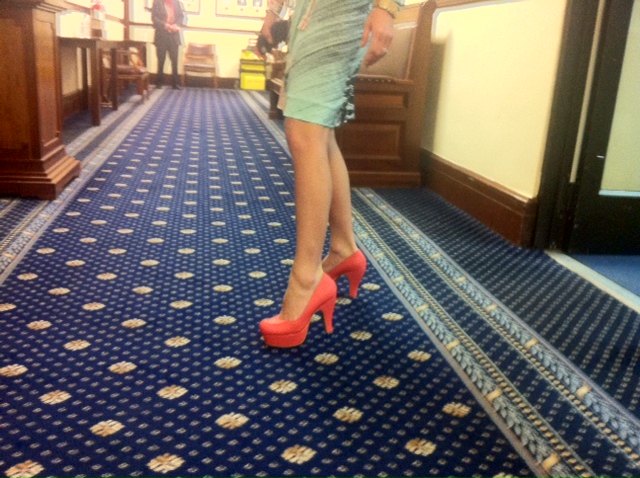
It’ll also be interesting because she will likely be the only candidate who can walk just as  gracefully down the carpeted halls of the Capitol building as she can on icy sidewalks, wearing stilettos.

And she’s a fighter.

Contact Amanda Coyne at amandamcoyne@yahoo.com

Facebooktwittermail

Chuck Kopp rumored to be after state Sen. Fred Dyson’s seat

Rumors abound that Chuck Kopp, legislative aide to Senator Fred Dyson, is telling folks that his boss is retiring and that he intends to run for the state Senate seat in Eagle River. Dyson was first elected to the legislature in 1996 and has served in the Senate since 2002.

Fiscal conservative former Rep. Nancy Dahlstrom is also rumored to be interested in the seat. However, if Rep. Bill Stoltze, who is also in that district decided to run for the Senate, it would be his for the taking.

Kopp was Sara Palin’s very short lived public safety commissioner who resigned after it came out that he had been had been investigated and reprimanded for a sexual harassment complaint made by an employee when he was the chief of police in Kenai.

Most recently, Kopp’s name has also been in the news for being the brother-in-law of Judge Paul Pozonsky. Alaska Department of Labor hired Pozonsky as hearing officer last year, even though he was being actively and openly investigated by the Pennsylvania Attorney General’s Office at the time of his hire. Too, the job was only open to Alaska residents. Pozonsky has recently been charged, among other things, for pilfering cocaine while on the bench in Pennsylvania.

Questions quickly arose, and keep arising, about possible political patronage. But Kopp has denied that he had anything to do with the hiring, and told the Anchorage Daily News in December that he didn’t know that Pozonsky had even applied for the job until the hiring was in process.

“I knew that he retired from his job (as a judge) and I was informed afterwards that he had applied. And I never communicated with Department of Labor or the governor’s office, or anybody. That was strictly all his doing,” Kopp told the ADN.

Contact Amanda Coyne at amandamcoyne@yahoo.com

Facebooktwittermail

Republican operatives start to descend

Republican wonderkid Chris Turner, a Texas based political consultant, was spotted in Anchorage earlier this week.  Although you wouldn’t know it from his firm’s lousy website, he is one of the industry’s rising stars supposedly having won 92 of the 100 races that his firm was involved in during the 2012 campaign cycle.

Most likely he was doing some recon for the 2014 Senate race, as any Republican political consultant worth his or her spit should be doing, giving the millions that will be spent on the race.

Contact Amanda Coyne at amandamcoyne@yahoo.com

Facebooktwittermail

Model for Mark Begich and gun control vote

Sen. Mark Pryor, Democrat from Arkansas, is responding to an ad from Mayors Against Illegal Guns, the group founded by New York City Mayor Michael Bloomberg, which is criticizing Pryor’s gun control vote. Pryor was one of four U.S. senators to buck the Dems and vote against gun control. Bloomberg’s group reportedly has spent $350,000 on the ad

In his counter, Pryor takes on Bloomberg, which is likely a winning strategy in Arkansas as it would be in Alaska. Watch here:

http://www.youtube.com/watch?v=m5JDuTkHt20

Sen. Mark Begich also voted against gun control, and Bloomberg’s mayors are also eyeing  Begich’s vote. I haven’t seen any Bloomberg commercials yet, but they are said to becoming and Begich is likely salivating over notion. He’s already responding with radio ads, using his vote on gun control as a positive. Which, despite a ridiculously flawed PPP poll, it will likely be.

PPP also came out with a poll on the Arkansas race. It describes its findings: “Mark Pryor’s chances for reelection next year would be enhanced if he supported a background check bill when it comes back up in the Senate.”

I don’t know if the Arkansas poll was as flawed as the poll in Alaska. If it is, then Pryor’s team should just ignore it. The PPP poll done on gun control in Alaska showed that only 35 percent of Alaskans opposed background checks, a notion that’s so absurd that I dug a little deeper into the poll. Among the poll’s many flaws:

  • Gender: Alaska is roughly 50 percent male to female, but the firm sampled 56 percent women to 44 percent men.
  • Party affiliation: Of the total registered voters in Alaska, only 14 percent are registered Democrats. About 27 percent are registered Republicans. The sample size that PPP used was 25 percent Democrats and 30 percent Republicans.
  • “Independents/other.” About 53 percent of registered voters are registered “undeclared,” and “nonpartisan.” Then there’s the Alaska Independence Party, which is a whole other breed of people, and the Libertarians.  The two of them make up about 6 percent of voters. The PPP’s sample lumps them all together, calls them “Independent/other,” and only uses a 45 percent sample size.

As I wrote before, I’d chalk that poll up, as I have other PPP polls, to the kind of crackpot tool that you find on both sides of the political spectrum intent on spreading propaganda and false narratives if it weren’t for the fact that the media dutifully reports on the polls.

There’s a healthy debate to have over Begich’s gun control vote. But it won’t happen through distortions and fabrications.

Contact Amanda Coyne at amandamcoyne@yahoo.com.

Facebooktwittermail

Should UAA Chancellor Tom Case join sacked AD Steve Cobb?

University of Alaska Anchorage Chancellor Tom Case believes that sacked UAA athletic director Steve Cobb provided unprecedented “outstanding contributions to our student-athletes, the community and to Seawolf Nation.

“Dr. Cobb’s legacy at UAA includes a number of remarkable achievements of which we are all proud,” Case wrote.

According to Case’s press release, Cobb got fired because “despite his efforts, Steve will not be able to bring all elements of the public together in support of UAA.”

“Criticism of Steve has become a distraction from the great work that UAA does every day,” Case, who is reportedly good friends with Cobb, wrote.

It must be a great distraction when you’re employing the kind of guy who would call your boss, UAA President Pat Gamble, “mentally ill,” and those in the hockey community who had been pushing for his firing “scoundrels.”

(Cobb is threatening to sue. If that happens, Case’s heap of praise will certainly be used as evidence.)

It must be hard to bring elements of the public together when you all but turn a blind eye when your coach thwacks a student. And here, I’m referring to both Case and Cobb, both of whom knew about the 2011 assault by a hockey coach on a student. And both of whom have chosen to basically defend it. Today, Case called the allegation “overstated.”

Let’s be clear here: A hockey player was physically assaulted by a coach, whose immediate boss was Cobb. And the coach didn’t so much as get a slap on the hand from Cobb. And Cobb was fired not because he didn’t act on the assault, but because he supposedly couldn’t bring the community together.

Let’s revisit the story. Here’s what we know so far: In 2011 then UAA hockey coach Dave Shyiak struck player Nick Haddad with a hockey stick during a drill. That’s not disputed.

What is in dispute, as if it even matters, is how hard the strike was. Shyiak has said that he only hit Haddad’s knee pads. Others present, including former UAA hockey player Mickey Spencer who has gone public, say that the hit was more like a “baseball-style” swing at Haddad’s thighs.

“He tomahawked, lumber-jacked-whatever you want to call it-him across the thigh on his (hockey) pants,” Spencer said. Shyiak then told the players to keep it between them, Spencer said.

Haddad confirmed the hit, but didn’t think that Shyiak had meant to injure him.

Shortly after the incident, Cobb ordered a half-hearted investigation into the matter, where nobody, including Shyiak nor Haddad was interviewed, even though nearly the whole hockey team witnessed it.

Shyiak was fired two years later not because he hit a kid with a stick, but because he was a losing hockey coach.

“In hindsight, it may have been more appropriate to have simply referred the matter to police at the time,” Case wrote about the incident. “However, Dr. Cobb concluded that the allegation was overstated, as has proven to be the case. Nevertheless, UAA takes seriously the need for students and student-athletes to feel safe at UAA and we will redouble our efforts to ensure that all students and employees understand reporting procedures for safety-related issues.”

No Case: What you as the chancellor need to ensure is that none of your employees hit students, with a hand, a ruler, an eraser, or a hockey stick, tomahawk style or not.

And if ensuring that no student gets hit isn’t one of your priorities; if you can’t ensure the community that such behavior will not be tolerated, then you have no business leading UAA. Instead, you should join Cobb, sit in a corner, and mutter about how everybody else is mentally ill.

Contact Amanda Coyne at amandamcoyne@yahoo.com
Facebooktwittermail

Bloomberg’s plans to target Begich over gun control will likely backfire

I don’t think that the common Alaska political adage that we “do it different up here,” is a good one for this state. I’ve seen that kind of mentality breed parochialism that has allowed the state to be the richest in the country, yet have the highest rates of suicide, alcoholism and sexual abuse. That mentality has encouraged discarding of social norms. It’s encouraged apathy and nepotism and has allowed those traits to be celebrated.

But sometimes it’s true. And those from outside of Alaska who want to thrust themselves on Alaskans would do themselves a favor by recognizing this.

In this case I’m talking about gun control, and about New York City Mayor Michael Bloomberg’s quest to go after Democrats up in 2014 who voted against background checks. Bloomberg’s Super Pac, Independence USA, has its eyes on Alaskan and on U.S. Sen. Mark Begich, among others.

Bloomberg’s goal is to break the stranglehold that that NRA has on politicians. His thinking, according to The New Republic, is that the NRA holds disproportionate sway over politicians, even as its support among the public dwindles. His message is that the power of the NRA is more a matter of “entrenched wisdom than fact.”

In 2010, Independence USA spent $10 million on ads supporting pro-gun-control candidates. According to the New Republic, the group is credited for unseating California Democratic Rep. Joe Baca. Independence USA is also pumping money into the group Mayors Against Illegal Guns. The group has grown to 975 mayors, and has more than 50 staffers along with a boatload of lobbyists and field organizers.

As for 2014, “Bloomberg is planning to hit the airwaves on a scale Washington has not fully grasped.”

The question is what, if any, impact a Bloomberg attack on Begich will have.

For one, it might actually help Begich. Just yesterday I heard his voice in an ad on the radio, telling listeners that we just do things different up here, and warning them that Outsiders are going to take him on for his gun vote.

Secondly, there is no other candidate from either party who could win the race who would vote any differently than Begich.

Let me repeat: No other candidate in Alaska has a chance of winning if he or she is any softer on guns than Begich.

Alaska is gun country. It’s a state where the difference between having and not having a gun can mean the difference between life and death. That’s not some sort of NRA-hyped mythology that may or may not be perpetrated in other states. That’s just fact, and Begich, more than Bloomberg knows this.

Another fact: Anchorage, the state’s largest city, which has lax gun restrictions, has a lower murder rate per capita than does New York City.

I can see the counter ads now: The mayor of New York City thinks he can change Alaska? Mr. Mayor, clean up your own backyard. And when you get that done, come tell us how to do things differently.

Contact Amanda Coyne at amandamcoyne@yahoo.com

Facebooktwittermail

Unlike other candidates for U.S. Senate, Joe Miller isn’t dithering

You can say a lot about Joe Miller, and as time goes on, much will be said. But, unlike other potential GOP candidates for U.S. Senate, you can’t accuse him of being a ditherer.

Politico is reporting that on May 2 — weeks ago — Miller filed a Federal Election Commission Form 2 stating his intent to run for Senate next year. “It’s a document that any candidate must complete upon receiving more than $5,000 in contributions to a political campaign or authorizing another party to take in over $5,000 in contributions,” Politico wrote.

In the meantime, Lt. Mead Treadwell is still testing the waters. On May 6 he told reporters that he was, “intensifying our efforts to explore the viability of a run for the U.S. Senate in 2014.”

He said this after Gov. Sean Parnell announced that he wouldn’t go for the seat, signaling to the state that Treadwell may believe that Parnell would be a better candidate than he would. Or, at the very least, that Treadwell would have stepped aside for the sake of decorum.

That’s one way to come out of the gate with conviction in what is likely to be the most expensive, hard fought race in Alaska history.

Another much talked about candidate, DNR Commissioner Dan Sullivan, is also reported to be deciding. Or dithering.

And this just in: Sources inside the beltway have confirmed that Sarah Palin has commissioned an in-depth Alaskan poll to determine if she stands a chance at the seat. She doesn’t, and she likely won’t run. But at least her dithering is interesting.

Contact Amanda Coyne at amandamcoyne@yahoo.com

Facebooktwittermail

Parnell urges UA president to ‘take a stand’

Gov. Sean Parnell wrote a letter to University of Alaska President Pat Gamble on Thursday, urging him to “take a stand,” regarding issues that have plagued University of Alaska Anchorage’s athletic program.

In the letter, Parnell referred to news reports about UAA’s failing hockey program and a 2011 assault between a hockey coach and a student. Parnell said that he has “waited for action from the University’s leadership; however, to date no decisions appear to have been made nor communicated publicly.”

Since news broke three weeks ago on the assault (read more here), the university has been stone silent. Until recently, so was Parnell.

Parnell’s later is dated May 23. Presumably, the letter was leaked shortly thereafter to UAA Athletic Director Steve Cobb, who has been the source of many complaints about the athletic program, and has also been implicated in the alleged cover-up of the assault. Sources say that on Saturday Cobb told his staff about the letter and wondered aloud if his days at UAA may be numbered.

On Monday, Cobb supporters Don Winchester and Steve Nerland sent out a statement in support of Cobb. In that statement, the two seemed to blame the rivalry between UAF and UAA for the controversy surrounding Cobb.

‘”The UAA domination of UAF that (sic) probably doesn’t go over well in Fairbanks up on the Hill,”‘  the statement read. “Nerland, who was born and grew up in Fairbanks was referring to the UA Statewide Administration Building which is on a viewpoint rise high above the Tanana Valley overlooking Fairbanks.”

Winchester said that he “would bet…that secretly UAF wishes they would have as an effective and experienced administrator as Dr Steve Cobb.”

Read Parnell’s letter here: 5.23.13 Patrick Gamble – University Athletics

Contact Amanda Coyne at amandamcoyne@yahoo.com

Facebooktwittermail

Thank God it’s Friday’s random facts

LET THERE BE TALK: The First Long-Distance Telegraph Message, Sent on May 24, 1844: ‘What Hath God Wrought?’  Sent from the Supreme Court chamber in the Capitol in Washington, D.C., to the B & O Railroad Depot in Baltimore, Maryland. Source: AmericanLibraries.gov.

WHILE ALASKA WAS DREAMING OF PASSING GAS: Last week, the Energy Department approved Freeport LNG terminal — in which ConocoPhillips has a 50 percent stake — to export domestic liquefied natural gas to countries without a free trade agreement.  It was the second LNG project to gain such approval. Nineteen other projects are in the waiting. Source: The Associated Press.

TALLEST PLAYER IN THE NHL: The Boston Bruins’ Zdeno Chara is the tallest player in the NHL standing at 6’9″. Source: www.sportingcharts.com

MOST EXPENSIVE US SENATE SEAT IN 2012: Massachusetts. The two candidates, Scott Brown (R) and Elizabeth Warren (D) spent a total of over $82 million. Source: Center for Responsive Politics, www.opensecrets.org

NARROWEST MARGIN OF ELECTORAL VICTORY FOR A CURRENT SITTING MEMBER OF THE ALASKA LEGISLATURE : In 2006, Bryce Edgmon tied incumbent Representative Carl Moses after all ballots were counted and the race was decided by a coin toss that Edgmon won. Representative-Elect Edgmon asked for the coin as a souvenir and was told it was headed for safe keeping to the Alaska State Museum. Source: Alaska Division of Elections.

LATEST ABC NEWS/WASHINGTON POST POLL RESULTS: This week’s poll shows, despite growing criticism of the most recent IRS scandal and concerns surrounding Benghazi, President Obama’s approval ratings are stable at a tepid 51 percent. Obama’s support is aided by accelerating economic optimism and as well by comparison with a much less popular Republican Congress. Americans by a vast majority, 74 percent – 20 percent see the IRS’ recent behavior of investigating and auditing conservative groups as inappropriate. Further, on the attack on the U.S. Mission in Benghazi, Lybia, 55 percent of Americans feel suspicious of a cover-up. And only a third of those polled believe that the Obama administration is disclosing honestly what it knows about Benghazi. Despite these feelings of concern and ill-will, Hillary Clinton’s reputation appears to remain intact with 62 percent of the respondents approving of her job performance as Secretary of State. Source: ABC News.

IMPORTANT UNIVERSITY OF ALASKA STATISTICS:  Number of winning hockey season’s under UAA athletic director Steve Cobb’s 12 years of leadership – 0. Number of University leaders willing to take a stand against coach/player assaults – 0. Source: Me and members of the hockey community who have decided to befriend me.

DROWNING NOT WAVING: More Alaskans die in recreational boating accidents than die commercial fishing. Nine out of 10 involve boats under 26 feet in length. Three of four are power boats. Nine of 10 are adult males. Five of six experience sudden cold water immersion as the result of a capsize or fall overboard. Source : www.thealaskalife.com

DRILL BABY DRILL: BP has allocated $2.85 billion to develop Iraq’s Rumalia oilfield in 2013, up from $2.2 billion from last year, with plans to drill 300 more oil wells over the next five years. Source: SeekingAlpha.com

PRICE FIXING?  Last week, the European Commission raided offices of BP, Royal Dutch Shell, and Statoil part of an investigation into alleged oil price fixing. Source: The Guardian.

COST OF OBAMACARE IN CALIFORNIA:  Numbers are out for how much insurance under Obamacare will cost residents of California next year. In Los Angeles, health insurers will charge 25-year-olds between $142 and $190 per month in premiums for a bare-bones health plan. For a “Cadillac plan,” a 40-year-old in San Francisco will pay anywhere from $451 and $525. Source: CoveredCA.com

MONTHLY PREMIUMS THE STATE OF ALASKA PAYS FOR STATE WORKERS: For each state employee, the state of Alaska pays $1389 in monthly premiums for health insurance. Source: Alaska Department of Administration. 

Facebooktwittermail

Captain Zero alert

During Gov. Sean Parnell’s tenure, Alaska Department of Labor hired Judge Paul Pozonsky who was being actively and openly investigated by the Pennsylvania Attorney General’s Office at the time of his hire. Pozonsky has been charged for pilfering cocaine while on the bench in Pennsylvania. He is the brother-in-law of Chuck Kopp, a short lived Alaska public safety commissioner under Palin and current staffer for Alaska state Sen. Fred Dyson.

This happened under Parnell’s watch and yet he refuses to comment. Quote from the ADN:

A spokeswoman for Gov. Sean Parnell would not answer questions about the case Thursday, including whether Parnell believes failure to vet candidates is a widespread problem in the state and whether Pozonsky was given special consideration for the job because of personal connections to current or former state employees. The spokeswoman, Sharon Leighow, referred all inquires to the Labor Department.

You guessed it: Labor’s spokesperson is on vacation until June 3.

What could Parnell be thinking? Who in heaven’s name is advising him to stay mum? Does he have laryngitis? Is he scared? Does his simply not care? Does he have something to hide?

To the extent that this debacle could have been avoided as a big campaign issue, Parnell’s silence assures that it will stay front-and-center. That is, if any challenger or Alaska’s Democratic Party has any political instincts, which still remains to be seen.

Contact Amandamcoyne@yahoo.com

Facebooktwittermail

Whittier mayor faces recall and other strange things done in Alaska’s strangest town

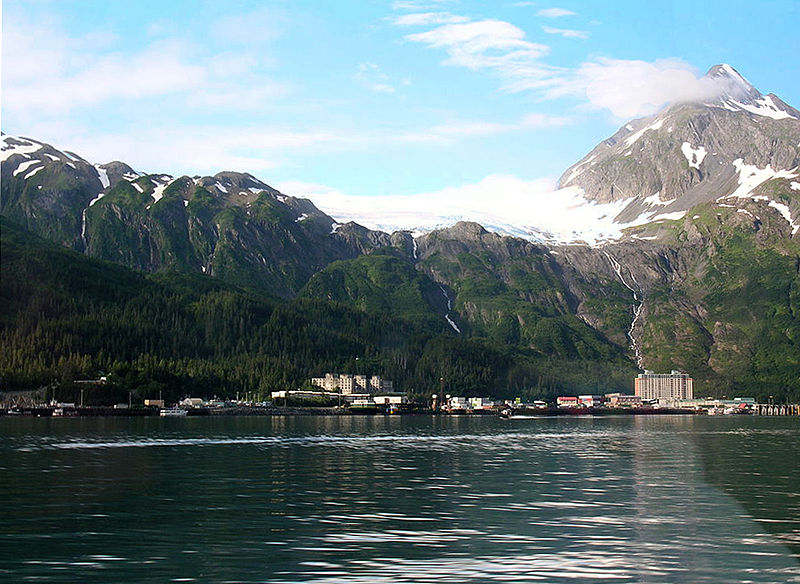
If you thought that being a public official in a town of about 220 residents would be anything like easy, think again. Nothing about Whittier, dubbed the strangest town in Alaska, is easy. Getting there, through the 2.5-mile-tunnel is hard enough. Then there’s the weather. Summer can be beautiful, but in the winter, the city sees about 22 feet of snow every year. (For comparison’s sake, Anchorage, about 50 miles away, gets an average of about six feet.)

Once you do get there, through that tunnel, through the snow berms, you have to contend with residents, most of whom live in one of two buildings in the city. And they are residents, this reporter can attest, who tend to have very strong feelings about things, particularly in the winter, when the snow piles, the tunnel only opens part time, and the towers begin to feel like crypts.

This winter has been particularly tough for city officials, namely long-time mayor Lester Lunceford and new city manager Tom Bolen. Lunceford is facing a voter recall, and he and three other city council members are facing ethics charges.

The recall effort springs from a January 15 council meeting where Lunceford and other city council members allegedly violated the open meetings act by unlawfully going into executive session. Because what was discussed during that meeting is the stuff of mystery, it will, apparently, remain mysterious. However, word is that they began talking about finances, called the executive session, and then came out talking about something all together different.

Or something like that. In any case, the recall petition received the 31 signatures needed for certification. The vote is now set for July 23.

The ethics charges have to do with the hiring of Bolen and the firing of the previous city manager, which may or may not have been the subject of the executive session.

Bolen stepped into the Whittier maelstrom in March. He’s originally from Maryland. Before moving to Whittier, he had been living in Kotzebue for 28 years, ten of which were spent working for city and borough governments.

He finds the job, “challenging,” and the city “complex” he said.  In addition to all the controversy, when he walked into the job there were about $8 million worth of state grants to the city that had yet to be used and some of those grants are on the verge of expiring. In other words, if they don’t use it, they could lose it. Some of the money is for projects that had never moved forward from design to construction. At least one of them—a $325,000 grant for railroad improvements—had even yet to be conceptualized.

And then, of course, there’s the question of what’s to be done with the Buckner Building, the dilapidated concrete mammoth structure built in 1953 with the intention to withstand bombs and keeping as many as 1,000 soldiers safe if a Cold War army invaded.

It now sits on the edge of town, like the ghost of an old warrior who just won’t give up the war, taking up precious land. Land that some residents say could be used to build houses and get people out of the towers, out of being atop and under each other. Or, the building could be restored to its former glory and turned into a museum and tourist attraction perhaps. Or maybe people could move back in?

In any case, the debates will rage as they are wont to do in Whittier. For his part, Bolen is just keeping his head down, learning about the city and doing his job.

“I tell everyone that if you don’t have a thick skin you shouldn’t be in this position,” he said.

Contact Amanda Coyne at amandamcoyne@yahoo.com

Facebooktwittermail

Deafening sound of silence on and off UAA’s ice

I didn’t play sports in high school or college, and aside from catching an occasional Oakland Raiders football game with my father, I didn’t watch them either. But people who I know and respect who have played sports, particularly intercollegiate sports, say that they learned invaluable lessons about fair play, leadership, about healthy competition and teamwork.

Some of them have also talked about the darker side of sports, of hazing and bullying and breathtaking brutality. This kind of abuse happens all across the country (see the list compiled by ESPN). Recently a version of such bullying has made its way into the papers in Alaska.

Some of the incidents across the country seem harmless. But some of it is repulsive and has resulted in death or permanent mental and physical scarring.

Schools and other institutions are now taking the lead on the discussion. And as that discussion continues, the light, is increasingly shinning on the culture that in some cases ignores, and other cases encourages, such behavior. The spotlight is headed for the top, from whence that culture springs.

The recent firing of the Rutgers basketball coach Tim Rice and the school’s athletic director Tim Pernetti have opened up the discussion beyond athlete on athlete bullying. Now, questions are being asked about bullying and abusive coaches, insensitive athletic directors and about the greater institutions that sometimes foster, and sometimes ignore such behavior. Why, people are wondering, if we aren’t putting up with kids bullying kids, are we putting up with abusive coaches and the leadership that tolerates such deplorable behavior? Why, in the age when there’s a veritable cottage industry of anti-bullying programs across the country, have we tolerated such abuse? Would we tolerate such behavior in the classroom?

Institutions across the country are now beginning to say no.

Following the firing of Rutgers’ Rice, the men’s lacrosse coach Brian Brecht was fired for verbal abuse. Wisconsin-Green Bay opened an investigation of basketball coach Brian Wardle for verbally and emotionally abusing players. A high school basketball coach in Saratoga Springs, N.Y. was suspended last week verbally abusing players. Another high school coach was fired in Michigan for the same behavior. Longtime Eastern Connecticut State University baseball coach Bill Holowaty was suspended for throwing of a helmet in the bleachers during a game and for verbal abusive. He then retired.

In Alaska however, a hockey coach is allowed to slash a player with a stick, allegedly cover the incident up, and the university’s leadership only takes action, and tepid at that, after the community began to make noise.

Here’s what we know so far: On May 13, Anchorage Daily News sports reporter Doyle Woody broke the story that in 2011 then UAA hockey coach Dave Shyiak struck player Nick Haddad with a hockey stick during a drill.

That’s not disputed, and in fact was one of the most well known secrets in the hockey community and among some university officials, including UAA’s athletic director Steve Cobb.

What is in dispute, as if it even matters, is how hard the strike was. Shyiak has said that he only hit Haddad’s knee pads. Others present, including former UAA hockey player Mickey Spencer who has gone public, say that the hit was more like a “baseball-style” swing at Haddad’s thighs.

“He tomahawked, lumber-jacked-whatever you want to call it-him across the thigh on his (hockey) pants,” Spencer said. Shyiak then told the players to keep it between them, Spencer said.

Haddad confirmed the hit, but said that it has been overplayed. “There was an incident with Coach Shyiak and myself where he slashed me across the pants during practice,” Haddad wrote in a statement. “Obviously it is not acceptable for a coach to do this to one of his players, and there is no excuse for it to have happened. That being said, I don’t believe his intent was to injure me and I think he regretted his actions immediately.”

(It should be noted that some players hazed by the Rutgers coach also made excuses about their coach, excuses sound eerily similar to those you might hear at any given night at a women’s shelter.)

Shortly after the incident, Cobb ordered a half-hearted investigation into the matter, where nobody, including Shyiak, was interviewed, even though nearly the whole hockey team witnessed it.

Shyiak was fired two years later not because he hit a kid with a stick, but because he was a losing hockey coach.

And it all might have been ignored forever if it weren’t for a group of dedicated hockey fans who never liked Cobb and took umbrage with him over his search for a new hockey coach. They, including someone with whom I’m in a relationship, began writing letters to university officials questioning athletic director Cobb’s overall performance. Some of those letters alluded to the assault.

But the university only began paying attention after the assault made its way into the newspaper.

Let’s be clear here: A hockey player was physically assaulted. University of Alaska President Pat Gamble and UAA Chancellor Tom Case knew about the allegations. But it took a newspaper article to spurn them into action.

UAF police are now investigating. Gamble and Case have clammed up presumably pending results of that investigation.

Unlike other school officials across the country, they haven’t made statements about not tolerating such behavior. They haven’t talked about how such repulsive behavior undermines the very values that forms their institutions. They are willing to sit silent until the investigation runs its course, which could take months. And they are willing to allow the athletic director, who was Shyiak’s boss and who is therefore ultimately responsible, continue to collect his hefty state salary.

When Gov. Chris Christie heard of the situation at Rutgers, he called the coach an “animal” and said that had he known about Rice’s behavior earlier, he would have used his power of persuasion to ensure that the coach and the athletic director were fired. There’s a reason why nobody in the country would ever call Christie “Captain Zero.”

Gov. Sean Parnell, the state’s moral arbiter, has spent a lot of time and public dollars urging Alaskans to choose respect. “We can stop the epidemic of domestic violence and sexual assault by shedding silence and passivity,” Parnell once said in a speech. “We can speak up and proclaim these acts to be unacceptable. Together, we can begin the change towards greater respect for one another.”

Parnell knows about the assault. So far he has chosen to choose silence.

Contact Amanda Coyne at amandamcoyne@yahoo.com

Facebooktwittermail

Off-road corruption

A paper written by economist Filipe R. Campante of the Harvard Kennedy School looks at corruption in state capitals around the country and finds that the more isolated a state capital, the more corrupt public officials working in that capital are.

“We show that isolated capital cities are robustly associated with greater levels of corruption across US states, in line with the view that this isolation reduces accountability…” the author writes.

The reason? One theory is that there is less media coverage in those capitals.

Because academicians aren’t prone to make anything accessible, particularly their government funded research, I haven’t been able to get the whole paper. But Juneau, the only state capital not on the road system, didn’t make the corruption cut. That’s probably because the research was conducted by looking at the number of federal convictions for public corruption between 1976 and 2002. Alaska likely would have made the list had the research gone past 2006. And it might have added more fuel to the capital move debate that’s been raging for decades.

As it is, from 1976 until 2002, Springfield, Illinois and Pierre, South Dakota were the place where shady politicians tend to hang.

Another interesting point: many state capitals were constructed in isolated places in order to get away from the influence of industry. However, as the author points out, the more isolated the capital, the more money goes into campaigns.

Contact Amanda Coyne at amandamcoyne@yahoo.com

Facebooktwittermail